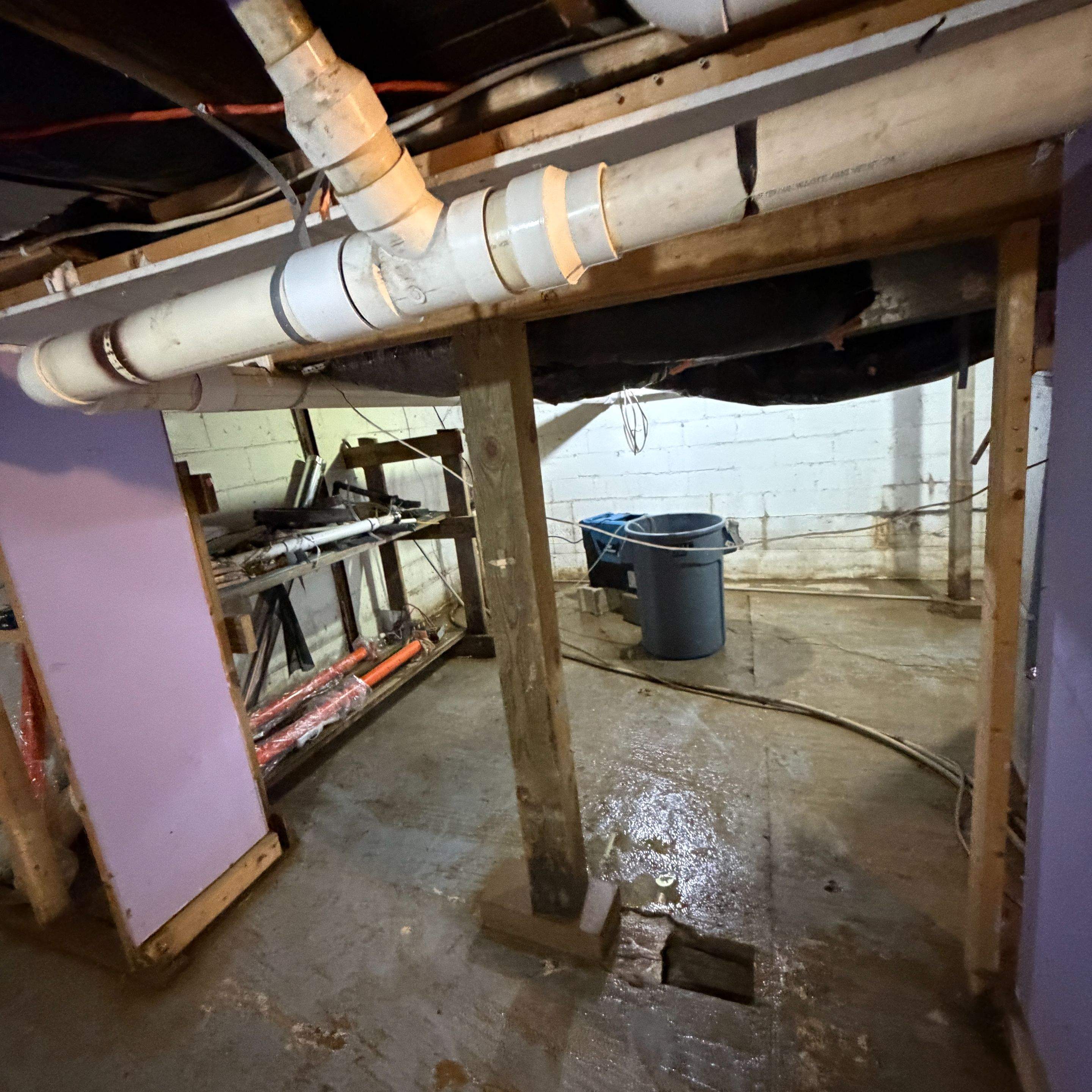
Problem: You Cannot Tell How Far the Contamination Has Spread
Black water does not stay where you can see it. By the time you notice sewage backing up through a basement floor drain or a toilet overflow soaking the hallway, the contamination has already wicked into baseboards, traveled under cabinets, soaked subflooring, and started migrating up drywall through capillary action. You will notice a smell long before you can map the damage. That is the bacteria multiplying inside materials you cannot see.
Solution: Moisture Mapping and Contamination Boundaries
Our first step on any Yorktown Category 3 call is establishing the contamination footprint. We use thermal imaging cameras and penetrating moisture meters to identify every surface holding contaminated water, not just the visibly wet ones. Then we mark a containment boundary, usually 2 feet beyond the last positive moisture reading, and seal it with 6-mil polyethylene sheeting. This stops cross-contamination into clean parts of your home while we work. For a deeper look at how this connects to broader water damage protocols, our sewage backup cleanup guide walks through the full process step by step.
We also check adjacent rooms and the floor below, because gravity moves contaminated water through wall cavities and ceiling assemblies faster than most people expect. A first-floor toilet overflow can produce wet insulation in a finished basement ceiling within an hour, and that hidden moisture is where the worst bacterial growth happens.
Solution: Source Removal Before Deodorization
Yorktown Water Restoration does not mask odors with fragrance foggers. We confirm the source is gone first, then use hydroxyl generators or ozone treatment inside sealed containment to neutralize residual odor molecules at the molecular level. If a smell persists, we go back into the wall cavity rather than spray more product. Real odor control is about removing what is rotting, not covering it up.
Problem: Drying a Contaminated Structure Is Not the Same as Drying Clean Water
You cannot just throw fans at a sewage event and call it dry. Pathogens continue to thrive in damp materials, and standard air movers spread contaminated particulate across your home. Drying without proper containment and air filtration turns a localized problem into a whole-house contamination event.
Problem: Odor Returns Weeks After the Visible Cleanup Looks Finished
One of the most common calls we get from Yorktown homeowners is the panicked follow-up two or three weeks after a DIY cleanup or a rushed job by another contractor. The floor looks fine, the drywall was patched, but the smell came back the moment the weather warmed up. That odor is bacterial residue inside materials that were never properly removed or treated.
Solution: Documentation Built for Adjusters
We photograph every stage, log moisture and humidity twice daily, write line-item scopes using Xactimate pricing your carrier already recognizes, and speak directly with your adjuster when scope disputes come up. If you also have structural concerns or need to coordinate with broader restoration work, our water damage restoration service page outlines how the full project fits together. If we believe a claim should be appealed or escalated, we will say so plainly.
Solution: Negative Air Containment and Monitored Drying
Once porous materials are out and surfaces are disinfected, we set up negative air machines with HEPA filtration that exhaust outside your home, pulling airborne contaminants away from clean areas. Air movers and low-grain refrigerant dehumidifiers run inside the containment until moisture readings on remaining structural elements match dry standard, usually 3 to 5 days depending on saturation. We document readings twice daily so your adjuster sees a clear drying log.
Solution: Controlled Demolition and Documented Disposal
We perform what is called flood cuts, removing drywall 12 to 24 inches above the waterline, pulling baseboards, and extracting carpet and pad in sections that are bagged immediately. Every load is documented with photos and weight tickets so your insurance carrier has the evidence they need. Hardwood floors get evaluated case by case. Sometimes the finish protected them long enough to dry and refinish. More often, with sewage exposure over 24 hours, replacement is the safer call.
Semi-porous items like solid wood furniture, sealed concrete, and finished cabinetry can sometimes be saved with aggressive cleaning, multiple antimicrobial applications, and extended drying. We make those calls on a case-by-case basis and tell you upfront which items are worth the labor and which ones are not. Sentimental items get flagged separately so you can decide whether specialty restoration is worth pursuing through a contents vendor.
Problem: Porous Materials Are Almost Always a Total Loss
Homeowners hate hearing this part, but it is the truth. Carpet, pad, drywall below the waterline, insulation, particleboard, and upholstered furniture that contacted Category 3 water cannot be safely cleaned in place. The IICRC S500 standard requires removal and disposal because no surface disinfectant penetrates deep enough into porous fibers to neutralize embedded pathogens. Trying to save these items risks long-term mold growth and respiratory illness for your family.
Solution: Professional Extraction With PPE and Hospital-Grade Disinfectants
Our technicians arrive in full PPE: Tyvek suits, P100 respirators, nitrile gloves, and rubber boots. We use truck-mounted extractors that can pull hundreds of gallons per hour, followed by EPA-registered antimicrobial application rated for Category 3 work. We follow this sequence on every job:
- Extract all standing water and sewage solids within the first hours on site.
- Remove and bag contaminated porous materials under containment.
- HEPA vacuum and apply antimicrobial to all remaining structural surfaces.
If your event involved a sump pump failure or basement intrusion, our sump pump failure response page covers the mechanical side of preventing a repeat.
Problem: Standing Sewage Is a Health Emergency, Not Just a Mess
Raw sewage contains E. coli, hepatitis A, rotavirus, salmonella, and a long list of other pathogens. Even brief skin contact can cause infection, and aerosolized particles from disturbed water reach your lungs. You should not be wading through it in rubber boots, mopping it with a household bucket, or running a shop vac you plan to use again. The exposure risk is real and the cleanup tools you have at home are not rated for this.
Problem: Insurance Claims for Sewage Are Often Denied or Underpaid
Many homeowners assume their policy covers sewer backup. It frequently does not, unless you added a specific endorsement. Even when coverage exists, adjusters question scope, dispute material categorizations, and push back on Category 3 protocols they consider excessive.