The Standard Dry-Out Timeline at a Glance
Most Yorktown dry outs follow a recognizable arc. Here is the typical structure:
- Day 1: Emergency response, extraction, equipment placement
- Day 2: First moisture check, adjustments, controlled demolition if needed
- Day 3: Mid cycle monitoring, equipment repositioning
- Day 4: Final moisture checks on most materials
- Day 5: Equipment removal once dry standard is met
That is the baseline. Now let us look at what stretches or shortens it.
5 Factors That Control Your Dry-Out Time
Every variable below can add or subtract days from your timeline:
- Water category: Clean water (Cat 1) dries fastest. Grey water (Cat 2) adds sanitizing steps. Black water (Cat 3) often requires removal of porous materials before drying even begins.
- Material porosity: Tile and sealed concrete release moisture quickly. Hardwood, drywall, and insulation hold water far longer.
- Saturation depth: Surface wetting dries in a day or two. Water that wicked up walls 24 inches or soaked into the subfloor can double the timeline.
- Response speed: Extraction within the first 24 hours dramatically shortens drying. Water sitting for two or three days saturates everything it touches.
- Ambient conditions: Humid Yorktown weather slows evaporation. Sealed, climate controlled spaces dry faster than drafty basements or crawl spaces.
If you want a deeper look at how moisture moves through structural materials, our piece on how long water damage takes to dry walks through the science.
Quick Tips to Help Your Dry-Out Finish Faster
- Call for professional extraction as fast as possible
- Do not turn off the drying equipment, even at night
- Keep interior doors open to allow airflow
- Avoid running the home AC at unusual settings, the equipment handles climate control
- Remove personal items from affected rooms so crews can work efficiently
- Report any new musty smells or soft spots immediately
- Pull back area rugs and move furniture off wet flooring if you can do so safely
- Document damage with photos before extraction begins for your insurance file
Typical Timelines by Loss Type
Every Yorktown job is different, but these averages help set expectations:
- Supply line break under a sink: 3 to 4 days if caught within hours
- Dishwasher or refrigerator leak: 4 to 6 days due to subfloor saturation
- Washing machine overflow on upper floor: 5 to 7 days, often two levels affected
- Bathtub overflow: 3 to 5 days depending on how far water traveled
- Toilet supply line burst (clean water): 4 to 6 days
- Sewage backup: 7 to 10 days, with material removal before drying starts
- Storm intrusion through roof: 5 to 8 days, attic insulation usually replaced
- Basement flooding from groundwater: 6 to 9 days, longer if finished
These ranges assume Yorktown Water Restoration is on site quickly. The longer water sits, the longer every category becomes.
How We Know Your Home Is Actually Dry
Dry is not a feeling. It is a measurement. Here is what we verify before pulling equipment:
- Moisture content of wood framing at or below 16 percent
- Drywall readings matching unaffected baseline areas
- Subfloor readings within dry standard for your region
- Relative humidity stabilized in the affected space
- No condensation behind moisture barriers or under flooring
You will receive daily moisture logs. When the numbers hit the standard for two consecutive readings, equipment comes out.
Materials Ranked by Drying Difficulty
Not everything dries at the same pace. From fastest to slowest:
- Ceramic tile and sealed concrete (1 to 2 days)
- Engineered laminate flooring (often unsalvageable, replace instead)
- Carpet with quick extraction (2 to 3 days)
- Drywall, surface wet only (2 to 4 days)
- Hardwood flooring (5 to 10 days, sometimes longer)
- Insulation behind walls (usually removed rather than dried)
- Wet subflooring and joists (4 to 7 days minimum)
When hardwood is involved, we often use specialized floor drying mats that pull moisture directly through the boards. Even so, hardwood is the most common reason a job stretches past five days.
A few specifics worth knowing about the materials in your home:
- Solid oak vs engineered: Solid hardwood can sometimes be saved with mats and heat. Engineered planks usually delaminate and need replacement.
- Plaster vs drywall: Older Yorktown homes with plaster walls hold moisture longer because the lath behind absorbs water like a sponge.
- Cabinets: Particleboard cabinets that wicked water for more than 24 hours rarely recover. Solid wood boxes often do.
- Padding under carpet: Almost always removed and replaced. Drying it in place is slower and less reliable than swapping it out.
Red Flags That Extend the Timeline
Some jobs run long for reasons we identify on day one. Watch for these:
- Water sat for more than 72 hours before extraction
- Sewage or contaminated water contact
- Multiple floors or finished basements affected
- Hidden moisture behind cabinets, vanities, or built ins
- Mold already visible on baseboards or drywall
- HVAC system contamination
- Crawl space or attic involvement
Any one of these can push the timeline to seven to ten days. Mold complications can extend it further, and that is when our S520 protocols come into play. If you are worried about timing relative to mold, the 48 hour mold rule is worth reading.
Equipment That Determines Speed
The right equipment, in the right quantity, sized for the loss, is what separates a fast dry out from a drawn out one:
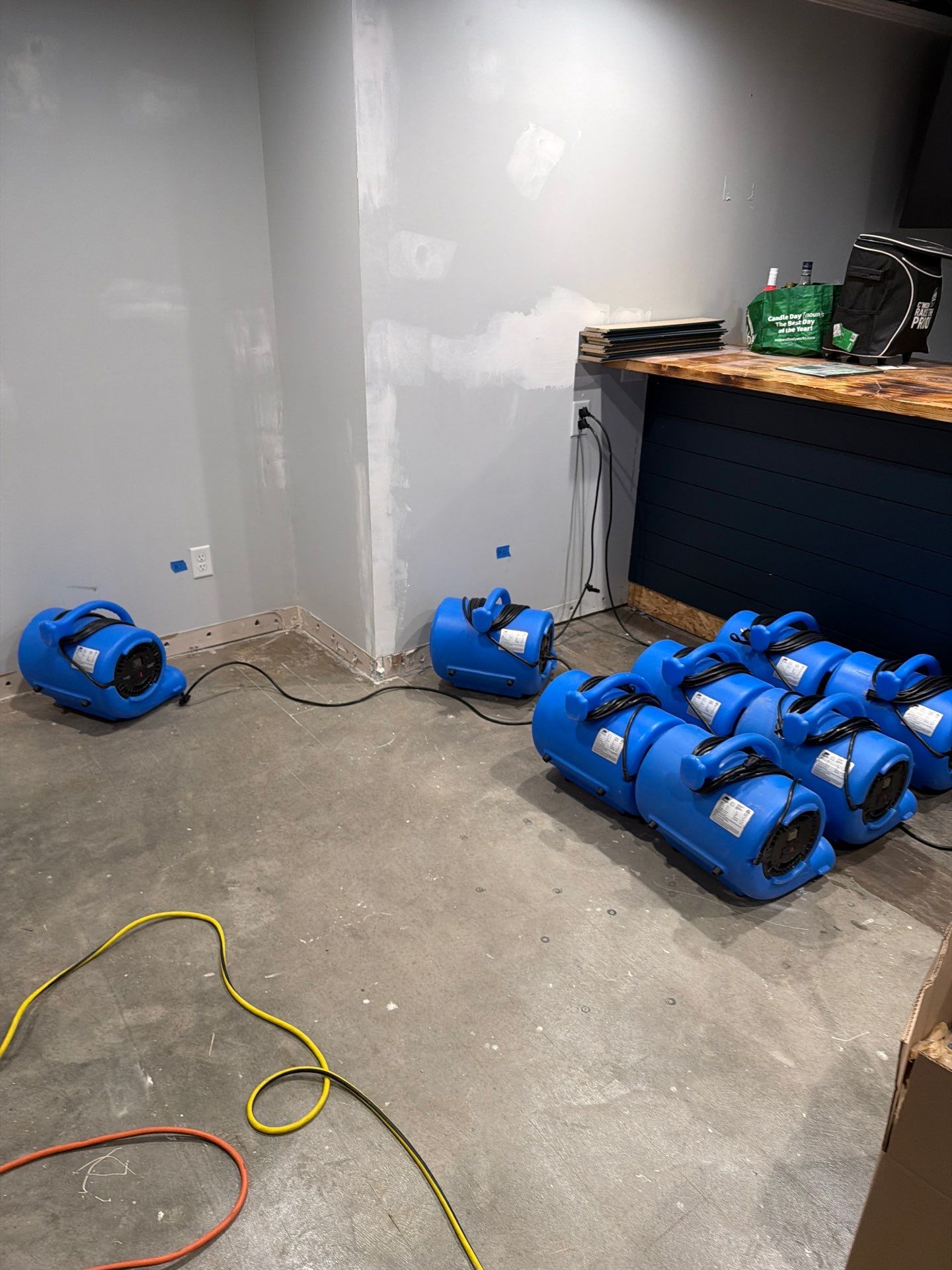
- Air movers: Roughly one per 50 to 70 square feet of wet area
- LGR dehumidifiers: Sized by pints per day against cubic footage
- Desiccant dehumidifiers: Used for large losses or low temperature environments
- Heat drying systems: Accelerate evaporation on tough hardwood jobs
- HEPA air scrubbers: Required when contamination or microbial growth is suspected
Undersized equipment is the number one reason DIY dry outs fail. A few box fans and a household dehumidifier will not move enough air or remove enough moisture to beat the 48 hour mold window. Our team follows IICRC S500 calculations to size every job correctly. For more on that standard, see our breakdown of IICRC water restoration standards.
What Each Day Actually Looks Like
Here is what you will see when our team is on site:
- Hour 0 to 2: Crew dispatch and arrival, in most cases within 2 hours of your call
- Hour 2 to 6: Standing water extraction with truck mounted or portable units
- Hour 6 to 10: Moisture mapping with meters and thermal imaging
- Hour 10 to 14: Air mover and dehumidifier placement based on cubic footage
- Day 2 onward: Daily readings, equipment adjustments, documentation
You will hear equipment running 24 7. That is normal and necessary. Turning it off, even overnight, can add a full day to the timeline.
What Happens After the Equipment Comes Out
Drying is just the first phase. Once Yorktown Water Restoration confirms the dry standard, the next steps usually include:
- Antimicrobial application on previously wet surfaces
- Reinstallation of baseboards, trim, and any controlled demo areas
- Drywall patching, texture matching, and paint
- Flooring reinstallation or replacement
- Final walkthrough and signed certificate of completion
Reconstruction adds its own timeline on top of drying, anywhere from a few days for minor patches to several weeks for kitchens or finished basements. The faster the dry out, the faster everything that follows can begin.